

About Us
The NEES@UCSB facility consists of permanently-instrumented geotechnical test sites designed to improve our understanding of the effects of surface geology on strong ground motion. The instrumentation at these sites includes surface and borehole arrays of accelerometers and pore pressure transducers designed to record strong ground motions, excess pore pressure generation and liquefaction that occurs during large earthquakes. An instrumented structure (at the GVDA site) is also monitored to improve our understanding of soil-foundation-structure interaction (SFSI) effects.
News
-
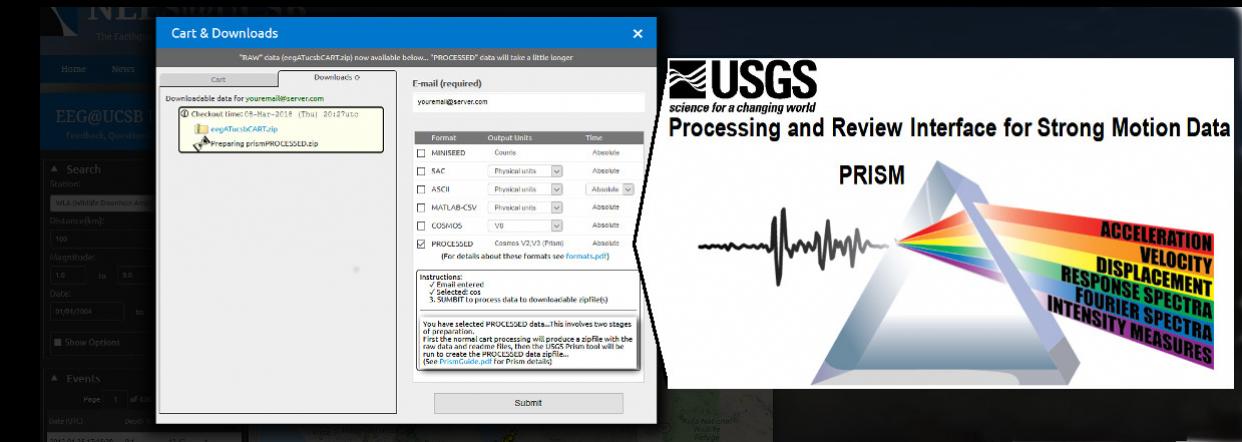
Our data-portal now offers processed velocity and displacement outputs in a COSMOS V2/V3 format using the USGS PRISM tool (see usgs-prism)
-
The NEES@UCSB Wildlife facility was recently enhanced to include a unique cross-hole array experiment. The new permanent cross-hole array includes three geophones and a solenoid-activated dual-direction hammer source at 4.6 meters depth.
-
Using ground motions recorded from a M4.1 event at the NEES@UCSB Garner Valley field site, Amit Chourasia of the San Diego Supercomputer Center generated animations of the ground motion response in the soil column.
-

The Wildlife Liquefaction Array (WLA) is a ground motion monitoring and liquefaction research site located at the southern most terminus of the San Andreas Fault system. The WLA field site records numerous earthquakes daily in this seismically active area. WLA is situated in California's...